Norton, John (Teyoninhokarawen) National Historic Person
Niagara-on-the-Lake, Ontario
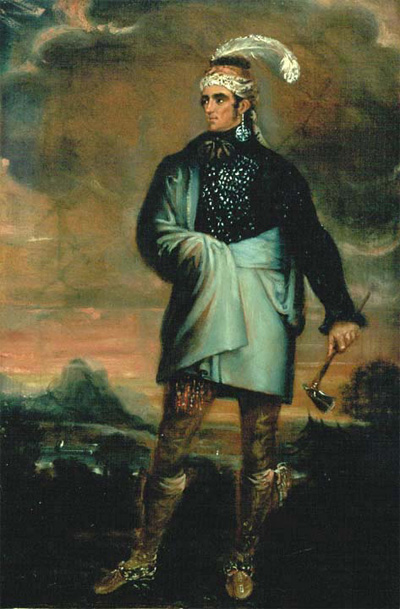
Portrait of Major John Norton (Teyoninhokarawen)
(© Canadian War Museum | Musée canadien de la guerre, Cat. No. 19950096-00)
Address :
Queenston Heights Park, Niagara-on-the-Lake, Ontario
Recognition Statute:
Historic Sites and Monuments Act (R.S.C., 1985, c. H-4)
Designation Date:
2011-07-19
Life Date:
1770 to 1823
Other Name(s):
-
John (Teyoninhokarawen) Norton,
(Designation Name)
-
Dowwisdowwis
(Other Name)
Research Report Number:
2010-029
Importance:
A great political and military leader among the Grand River Iroquois before, during and after the War of 1812
Plaque(s)
Existing plaque: Queenston Heights Park, Niagara-on-the-Lake, Ontario
Born to an Ani-Yunwiya (Cherokee) father and Scottish mother, Norton was adopted as an adult by Thayendanegea (Joseph Brant), a Kanyen’kehà:ka (Mohawk) leader, as his nephew and successor in the Haudenosaunee’s (Six Nations) struggles for independence and prosperity. During the War of 1812 he convinced many First Nations communities and their warriors to ally with the British. He led an Indigenous force to many victories, including at the Battle of Queenston Heights where they climbed the escarpment and engaged the enemy, allowing for the recapture of the position. His journals and writings provide a rare record of the times and a Haudenosaunee perspective on the war.