Establishment of St. Peter's Colony and Abbey National Historic Event
Muenster, Saskatchewan
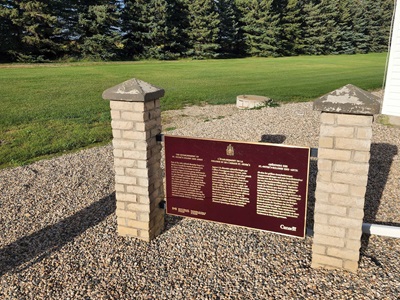
HSMBC commemorative trilingual plaque
© Parks Canada | Parcs Canada, Audra Norek, 2022
Address :
Muenster, Saskatchewan
Recognition Statute:
Historic Sites and Monuments Act (R.S.C., 1985, c. H-4)
Designation Date:
2007-06-08
Other Name(s):
-
Establishment of St. Peter's Colony and Abbey
(Designation Name)
-
Establishment of St. Peter's Colony and Abbacy
(Other Name)
Research Report Number:
2006-007, 2010-SDC-CED-016, 2009-097
Importance:
One of the largest German group settlements in Canada; Benedictines, Franciscan Sisters of St. Elizabeth and Ursulines of Bruno provided services and leadership in religion, education, culture and health care
Plaque(s)
Existing plaque: Near the town of Muenster, north side of the highway at St. Peter’s Abbey, St. Peter RM 369, Muenster, Saskatchewan
Part of the rich cultural diversity forged in Western Canada by waves of newcomers, St. Peter’s Colony was home to one of Canada’s largest German group settlements and its first Benedictine Monastery. Founded in 1903 through a unique blend of church and economic initiatives, this colony was also, from 1921 to 1998, a rare Abbey Nullius, or independent diocese. The Benedictines, Franciscan Sisters of St. Elizabeth, and Ursulines of Bruno provided religious services, education, and health care and, despite anti-German sentiment during the two world wars, created a vibrant centre of German Catholic heritage on the prairies.