Marr Residence National Historic Site of Canada
Saskatoon, Saskatchewan
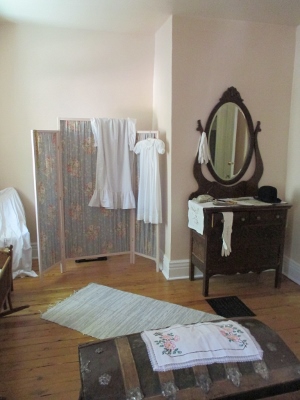
Interior view
© Marr Residence | Maison Marr, D. Greer
Address :
326 11th Street East, Saskatoon, Saskatoon, Saskatchewan
Recognition Statute:
Historic Sites and Monuments Act (R.S.C., 1985, c. H-4)
Designation Date:
2016-05-01
Dates:
-
1884 to 1885
(Construction)
-
1885 to 1885
(Significant)
-
1979 to 1979
(Significant)
Event, Person, Organization:
-
North-West Rebellion of 1885
(Event)
-
Temperance Colonization Society
(Organization)
-
David Hattie and George Hilliard (Carpenters)
(Architect)
Other Name(s):
-
Marr Residence
(Designation Name)
-
Marr House
(Other Name)
Research Report Number:
2014-17; 2013-27; 2012-34
Plaque(s)
Existing plaque: 326 11th Street East, Saskatoon, Saskatchewan
One of the oldest buildings in Saskatoon, this house was built circa 1884 for Alexander and Margaret Marr on land acquired from the Temperance Colonization Society, an Anglo-Canadian utopian group that created an agricultural community with the assistance of Chief Whitecap (Wapaha Sk¯a) and the Dakota from Moose Woods. The Marr Residence embodies the material conditions of the first major Euro-Canadian settlement in the area. A military field hospital during the North-West Rebellion in 1885, when nurses cared for casualties for the first time in Canada, it bears witness to the origins of Canadian military nursing.
Commemorative Intent
Marr Residence was designated a National Historic Site of Canada because:
it reflects the history of the Temperance Colonization Society, formed in Ontario in 1882. This utopian society was supported by the government of the day as part of a larger scheme to settle the West and reflected the government’s intention to recreate the best features of Anglo-Canadian civilization therein. This society became the first major European settlement in the area, facilitated by cooperation with the resident First Nations population;
as the second oldest building in Saskatoon, it speaks to the material conditions of settlement in the early history of that community;
as the only survivor of three houses that were part of a field hospital established during the North-West Rebellion of 1885, it marks the first time in Canadian history that nurses were employed by military field forces, and is directly associated with the origins of Canadian military nursing.
Source: Historic Sites and Monuments Board of Canada, Minutes, June 2014.