Grey Owl’s Cabin (B21)
Recognized Federal Heritage Building
Riding Mountain National Park of Canada, Manitoba
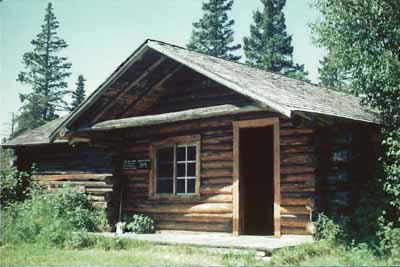
General view
© Agence Parcs Canada / Parks Canada Agency
Address :
Wasagaming, Riding Mountain National Park of Canada, Manitoba
Recognition Statute:
Treasury Board Policy on Management of Real Property
Designation Date:
1988-11-17
Dates:
-
1931 to 1931
(Construction)
Event, Person, Organization:
-
Godfrey Johnson
(Architect)
Custodian:
Parks Canada
FHBRO Report Reference:
85-54
DFRP Number:
12897 00
Description of Historic Place
Grey Owl’s Cabin, also known as Building 21, is situated on a small lake in Riding Mountain National Park of Canada. It is an L-shaped log building with a sheltered porch area. Peeled logs, wood shingles, exposed rafter tails and simple door and window trim give the cabin a simple rustic charm. The designation is confined to the footprint of the building.
Heritage Value
Grey Owl’s Cabin is a Recognized Federal Heritage Building because of its historical associations, and its architectural and environmental value.
Historical Value
Grey Owl’s Cabin is associated with the naturalist Grey Owl, who was hired to re-establish a beaver population in Riding Mountain National Park of Canada. Grey Owl transferred to Prince Albert National Park of Canada after just six months at Riding Mountain National Park of Canada. Despite this short term, his personal popularity as well as the causes he espoused has made his cabin a popular hiking destination and a significant interpretive resource in the park.
Architectural Value
Grey Owl’s Cabin is a good example of a functional log cabin. The two-room plan was designed to accommodate the park naturalist, and featured access doors for the wildlife he domesticated. The cabin’s high quality construction with natural peeled logs and wood shingles give it its rustic appearance.
Environmental Value
The natural site for Grey Owl’s Cabin has remained unchanged. The cabin benefits from its beautiful natural setting on Beaver Lodge Lake, and as such is a popular hiking destination for travelers and a familiar landmark.
Sources:
Edward Mills, Riding Mountain National Park, Manitoba, Federal Heritage Building Review Office Building Report, 85-054; Grey Owl’s Cabin, Beaver Lodge Lake, Riding Mountain National Park, Heritage Character Statement, 85-054.
Character-Defining Elements
The character-defining elements of Grey Owl’s Cabin should be respected.
Its functional design and quality craftsmanship, for example: the L-shaped two-room cabin; the roof that extends several feet beyond the wall to provide a sheltered porch area; the peeled logs, wood shingles, exposed rafter tails and simple door and window trim that create a simple, rustic character; the features related to the period of occupation by Grey Owl, such as the beaver access doors in the main section.
The manner in which the building maintains an unchanged historical relationship to its site, is compatible to its natural setting and is a familiar landmark as evidenced by: the building’s ongoing relationship to its natural landscape and Beaver Lodge Lake; the building’s log construction and rustic character that is compatible with its natural setting; the building’s role as a significant interpretive resource in the park and its popularity due to its association with the naturalist Grey Owl.
Heritage Character Statement
Disclaimer -
The heritage character statement was developed by FHBRO to explain the reasons for the designation of a federal heritage building and what it is about the building that makes it significant (the heritage character). It is a key reference document for anyone involved in planning interventions to federal heritage buildings and is used by FHBRO in their review of interventions.
Grey Owl's Cabin was built in 1931. The design is attributed to Godfrey (Gottfried) Johnson, an accomplished log builder who was involved in the construction of several major buildings in the Wasagaming townsite and vicinity. Parks Canada is the custodian. See FHBRO Building Report 85-54.
Reasons for Designation
Grey Owl's Cabin was designated Recognized for its historical associations, its environmental significance and its architectural qualities.
The building is associated with the naturalist Grey Owl, who was hired in 1931 to re-establish a beaver population in Riding Mountain National Park. Grey Owl transferred to Prince Albert National Park after just six months at Riding Mountain National Park, but his personal popularity and the popularity of the causes he espoused have made his cabin a popular hiking destination and a significant interpretative resource in the park.
The cabin contributes to the character of its beautiful natural site on a small lake, which was later named Beaver Lodge Lake in reference to Grey Owl's work (however short-lived) in this area.
Designed to provide a substantial two room cabin for Grey Owl, his wife and their tamed beavers, the building is simply detailed and carefully executed.
Character Defining Elements
The heritage character of the building resides in its massing, materials and construction techniques, and in the character of its setting.
"L" shaped in plan, the cabin is of high quality construction. The walls are of peeled spruce logs, horizontally laid and saddle notched at the corners. The corner joints are of particular interest: the projecting crowns are in alternating lengths, unlike the uniform lengths found on other park buildings. The roof on the main building section extends several feet beyond the wall to provide a sheltered porch area which was previously enclosed.
Peeled logs, wood shingles, exposed rafter tails and simple door and window trim create a simple, rustic character which should be preserved by repairing in kind, with the emphasis on maximum retention of original material. Features related to the period of occupation by Grey Owl, such as the beaver access doors in the main section, merit preservation. The natural finish of the logs should not be altered without careful analysis of appropriate finishes and patina.
The interior, with its simple two-room plan and exposed log walls, is in keeping with the rustic character of the building. Various shelves, tables and enclosures should be investigated to determine their relation to the use of the building, and appropriate conservation methods employed.
Situated on a small lake, the cabin benefits from its beautiful natural setting. An overly manicured appearance should be avoided.